

How to Read Odds on Pocketwin: A UK Player’s Guide
Understanding odds is essential before placing a bet on any casino game; On Pocketwin, the figures you see may describe a possible payout, a game’s theoretical return, or the likelihood of a particular result. These are related ideas, but they do not mean the same thing. Knowing which figure you are looking at helps you judge risk, compare games and set sensible limits.
This guide explains how to read common odds and probability information while using Pocketwin from the United Kingdom. Game availability, terms and payment options can change, so check the current game rules and casino terms before playing. Gambling should be treated as paid entertainment, not as a way to earn money.
Odds, probability and payouts: the difference
Probability describes how likely an outcome is. It may be shown as a percentage or as a fraction. If an event has a probability of 1 in 5, its chance is 20%.
Odds express the relationship between the chance of an event happening and the chance of it not happening. In fractional form, odds of 4/1 mean four units of profit for each unit staked if the bet wins, with the original stake usually returned as well. Decimal odds of 5.00 represent the same total return: a £1 winning stake returns £5, including the original £1.
Payouts are the amounts a game awards for a particular result. In a slot, the paytable may list a prize for a combination of symbols. The listed prize generally depends on the stake and the game’s rules. It is not a promise that the combination will occur within a particular number of spins.
Where to look for odds on Pocketwin
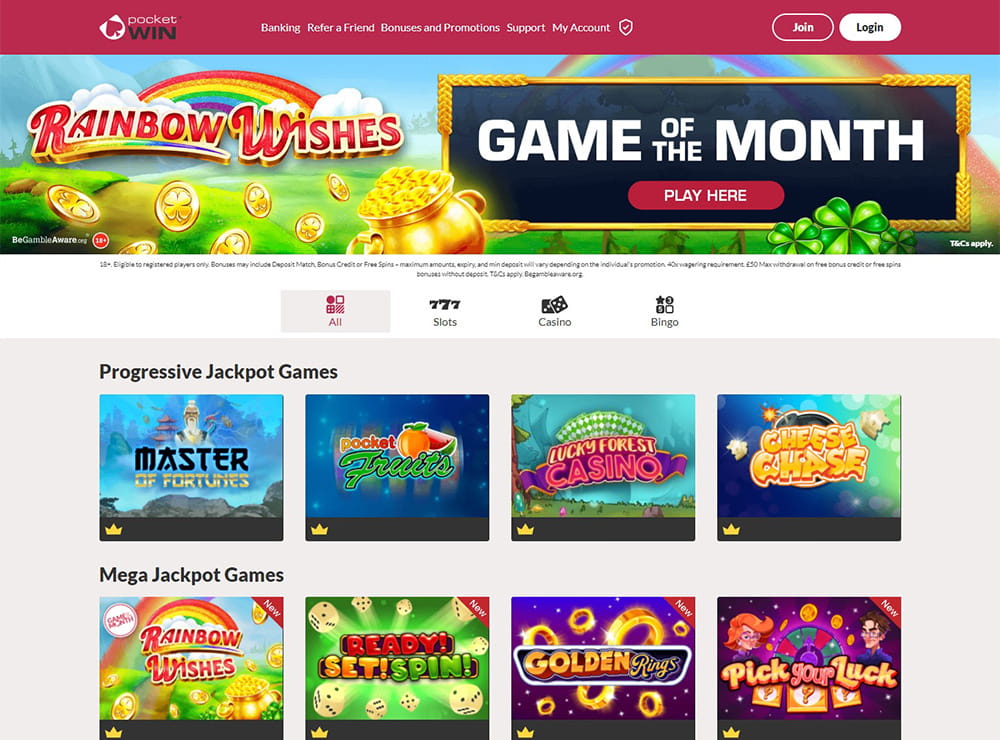
Open a game’s information, help or paytable section before wagering. The exact label and layout can vary by provider and device. In slots, look for the symbol values, paylines or ways to win, special features, maximum prize conditions and any stated RTP. In table games, review the rules and payout table for each bet type. If a figure is unclear, do not assume what it means—check the game’s help screen or ask support.
RTP, or return to player, is a theoretical percentage calculated over a very large number of game rounds. For example, a stated RTP of 96% indicates an average return of £96 for every £100 wagered across extensive play under the game’s specified conditions. It does not mean an individual player will get back 96% of their money, or that a particular session will follow that average. Results can vary widely, and the casino has a mathematical advantage in games with a house edge.
RTP is also different from the chance of winning a spin. A game might return a high proportion over time but still have long stretches without a payout, depending on its volatility and mechanics. Check whether the displayed RTP applies to the version available in the casino, because some games can have different configurations.
Reading a slot paytable
Suppose a slot paytable shows that three matching symbols pay 20 times the stake. At a £0.20 stake, the listed prize would be £4, subject to the game’s rules and any conditions shown. That prize table tells you what a winning combination pays; it does not tell you how often the combination will appear.
Also check whether the displayed value is a total return or a profit amount. Many slot paytables show the prize credited for a winning result, but presentation differs by game. Look for notes about bet level, paylines, coin values, wild symbols, scatters and bonus rounds. If a feature requires a certain stake or active line, a lower bet may not qualify for it.
Volatility is a general description of how prizes may be distributed. A lower-volatility game may produce smaller wins more often, while a higher-volatility one may have less frequent wins and potentially larger prizes. It is not a prediction of what will happen next, and it does not improve the underlying odds. A run of losses does not make a win “due”; each result follows the game’s design.
Comparing odds without being misled
When comparing games, use information that measures the same thing. RTP can help compare the theoretical long-run return of different games, but it cannot forecast a session. Paytable values show possible prizes, not their probability. A large maximum prize is not necessarily a sign that a game offers better overall value.
For roulette or other table games, each wager has its own payout and probability. A higher payout often corresponds to a less likely result. Read the rules for the specific table and variant, since bet options and payouts can differ. Do not compare a headline payout from one game with an RTP figure from another; they answer different questions.
A simple probability example
If a fair coin is flipped, the chance of heads on one flip is 1 in 2, or 50%. After five tails in a row, the chance of heads on the next independent flip remains 50%. Casino games are more complex, but the principle is useful: previous outcomes do not necessarily make a particular result more likely next time. Always rely on the stated rules rather than a “hot” or “cold” streak.
Questions and answers
Does 96% RTP mean I will get £96 back from a £100 deposit?
No. RTP is a long-run theoretical measure of wagered money, not a guarantee for a deposit or a single player. Your actual result could be higher or lower, including losing the entire amount you choose to risk.
Are odds the same as the chance of winning?
Not always. Odds may describe a payout ratio, while probability describes how likely an outcome is. A paytable may show what a result pays without stating how often it occurs. Check the game information for each figure’s definition.
Can I calculate the exact chance of winning on a slot?
Usually not from the paytable alone. Exact probabilities depend on the game’s internal design and are not always published in a form that lets players calculate every outcome. Use the provider’s rules and published information, and avoid treating any estimate as a guarantee.
Does a higher maximum win mean better odds?
No. Maximum win and probability are separate measures. A large advertised prize may be very unlikely, and the figure does not show the game’s overall return or how frequently smaller prizes occur.
What should I do if the odds or rules are unclear?
Pause before betting. Reopen the game information, review the provider’s rules, or contact Pocketwin support for clarification. If you still cannot establish how a bet works, choose another game or stop playing.
Play with clear limits
Before starting, decide how much you can afford to spend and how long you intend to play. Treat that budget as an entertainment cost, not as money you expect to recover. Avoid raising stakes to chase losses, and take a break if playing stops feeling enjoyable. Odds explain how a game is structured; they cannot remove risk or guarantee a result.
For UK players, use only gambling services that are appropriately licensed for the market and check the current operator information and terms. If gambling is causing financial or emotional harm, stop and seek support from a recognised UK gambling-help service. A responsible approach begins with understanding the figures—and accepting that every wager can lose.
It follow up to the better-loved brand-new provides you...
Pocket Casino App Review: Easy Mobile Play in the...
